Các lệnh cấm vận chip thúc đẩy liên minh thương mại chip Trung-Nga
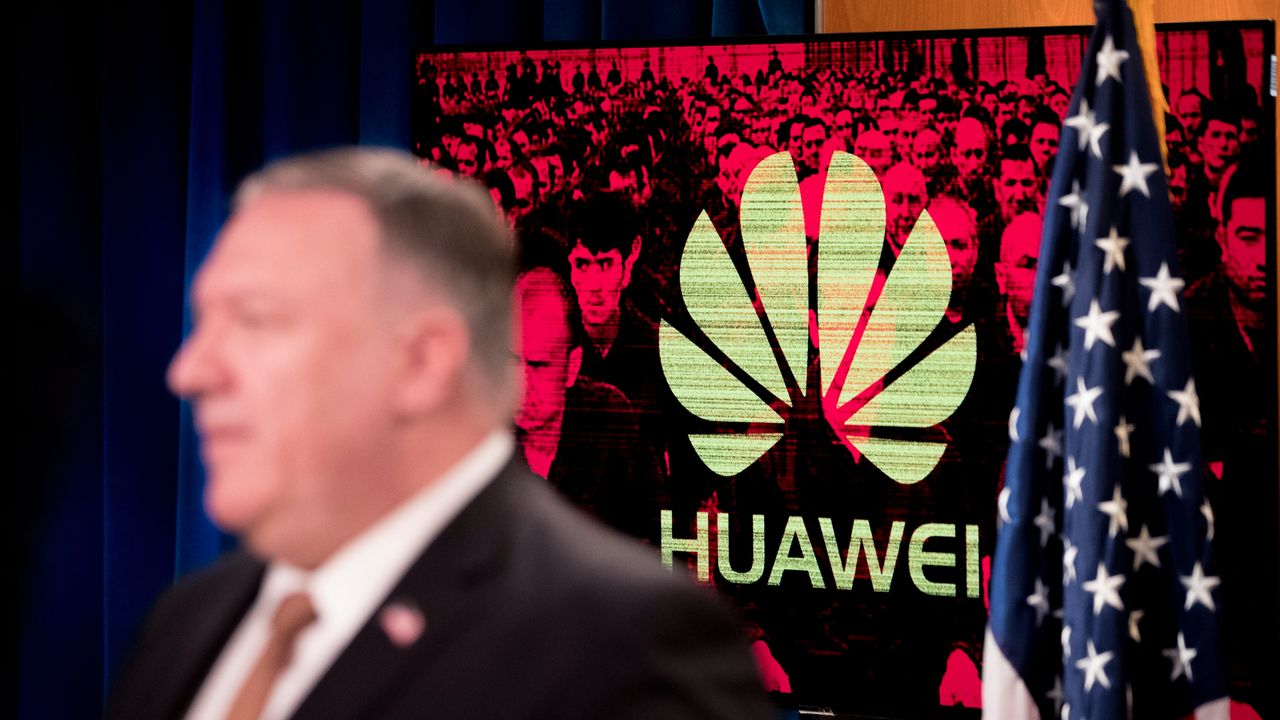
Sberbank, ngân hàng lớn nhất Nga, đang tìm cách sử dụng các bộ xử lý do Trung Quốc sản xuất để chạy mô hình AI GigaChat của Nga, do các lệnh trừng phạt phương Tây cản trở quyền truy cập vào phần cứng tiên tiến. Các biện pháp kiểm soát xuất khẩu chip của Mỹ đang tạo điều kiện cho sự hình thành một liên minh thương mại chip giữa Trung Quốc và Nga.
When German Gref, chief executive of Sberbank, told Russian state broadcaster Channel One in May that he hoped to run the country's flagship GigaChat AI model on Chinese-made processors, it highlighted how difficult getting access to the global supply chain was for countries like Russia. Sberbank, Russia’s largest lender and the driving force behind Russia's push into AI, is seeking to secure Chinese chips because Western sanctions continue to block its access to advanced hardware from abroad. Tom’s Hardware’ s own reporting suggests the most likely candidate to power Sberbank’s systems is Huawei's Ascend 950 family, the most advanced silicon China currently produces . Sberbank may well want chips, but getting hold of them from Huawei will be easier said than done. The Chinese chipmaker already has enormous orders to fulfill from ByteDance, Alibaba, and Tencent, with ByteDance alone committing $5.6 billion to the Ascend 950PR earlier this year. Huawei is targeting 750,000 units of that chip in 2026 and expects to earn $12 billion in AI chip revenue throughout this year. But it highlights how U.S. sanctions are pushing China to develop its own chips, which in turn attract other controversial states. That potentially allows China to extend its reach across an entire parallel supply chain. A sanctions-busting Sino-Russian alliance “Economic restrictions are pushing Russia toward Chinese compute solutions,” said Allen Maggard, a senior analyst at C4ADS, the Washington, DC-based global security nonprofit, in comments to Tom’s Hardware Premium . But Russia doesn’t need much pushing, Maggard argued. “I don't see a scenario in which Russia can economically scale its domestic compute capacity using Western solutions alone,” he explained. In part, that’s down to the country’s constrained economy. “Its defence industry can afford Western chips for individual weapon systems – for now – but its civilian tech sector cannot. That leaves China's electronics and computing sectors as Russia's most economical option going forward." Sberbank is not an isolated case in this way. Tramplin Electronics, a Russian sovereign IT company set up just over a year ago , is already marketing a processor called Irtysh based on a design from China's Loongson Technology. At the same time, Element, Russia's biggest chipmaker, in which Sberbank acquired a 41.9% stake in January, has reportedly begun producing microchips inside China for the Chinese automobile market. “A shift is clearly underway,” Maggard said, “but toward greater mutual access between the Chinese and Russian electronics sectors, probably skewed in China's favour.” All that adds up to less of a meeting of equals than Russia becoming a dependent customer of a still-developing semiconductor ecosystem – though Maggard points out that under Vladimir Putin, the Kremlin will likely resist a total surrender of sovereignty. “Moscow would certainly prefer, and likely intends, to build a parallel technology bloc with Beijing,” he said. Are actions backfiring? (Image credit: Huawei) The irony is that Western policy, which was designed to try and slow or stymie the development of China and Russia’s high-tech economy, may well have helped manufacture exactly the kind of trading bloc it set out to prevent. The issue is compounded by uncertainty in Washington DC, where the inhabitant of the White House seemingly can’t decide what he wants from the situation. In the space of 12 months, the Trump administration banned Nvidia's H200, unbanned it, slapped a 25% tariff on it , and created a licensing framework that experts immediately called contradictory. On 13 January, the Commerce Department published a regulation permitting the sale of advanced AI chips to China – a move described by the Council on Foreign Relations as "strategically incoherent" – that, if implemented strictly, would block most exports, but if implemented loosely, would fail to address any of the concerns that motivated the controls in the…