Razer Blade 16 (2026): Hiệu năng gaming cạnh tranh và thời lượng pin hàng đầu
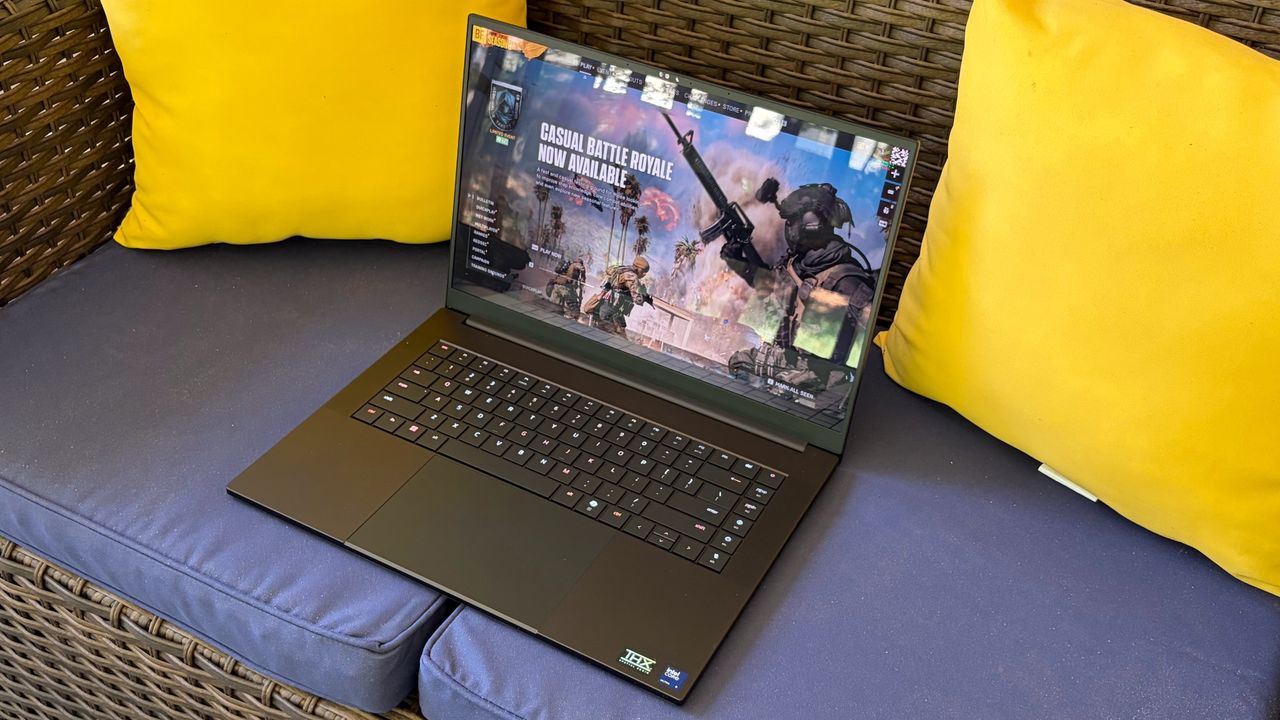
Razer Blade 16 (2026) được trang bị Intel Core Ultra 9 386H và GPU RTX 5090 flagship. Mặc dù thiết kế chassis giữ nguyên so với phiên bản cũ, bộ xử lý 25W mới cho phép thời lượng pin ấn tượng vượt trội so với các đối thủ cạnh tranh.
The Razer Blade 16 has long been leading contender among the best gaming laptops , thanks in part to its careful component selection and strong style. In this case, our review unit comes equipped with an Intel Core Ultra 9 386H processor and a flagship RTX 5090 GPU. While the chassis remains the same as the Razer Blade 16 that we tested a little over a year ago, the 25W processor in our new review unit enabled some impressive runtimes that eclipse the competition. You’ll have to pay a considerable sum for the luxury, but the Blade 16 makes as strong a case as a compelling premium gaming laptop. Design of the Razer Blade 16 We were impressed with the design of last year's Blade 16, and luckily, Razer hasn’t altered the formula for this year’s model. You get the same matte-black chassis that measures just 0.69 inches at its thickest point (0.59 inches towards the front). Build quality remains excellent in true Razer fashion. The overall design is minimalist, with a minimal amount of RGBs and no obvious ventilation slats along the sides for heat management. Instead, the clean design would look at home sitting on your desk while you're gaming with an Xbox controller, or sitting on your desk in a cubicle at work. The only bit of flash that you’ll find is the RGB Razer logo on the lid. Tom's Hardware Tom's Hardware Tom's Hardware Tom's Hardware You’ll find thin bezels around the glossy 16-inch OLED display, below which you’ll find the full-size keyboard and a large trackpad. There’s also a small status LED at the front right of the chassis (just below the Intel Core Ultra sticker on the deck). It pulses white when the laptop is in standby mode. There’s a healthy assortment of ports on the laptop, including three legacy USB 3.3 Gen 2 Type-A ports. There’s also one Thunderbolt 4 port, one Thunderbolt 5, an SD card reader (UHS-II), a full-size HDMI 2.1 port, and a 3.5 mm combo audio jack. There’s also a proprietary power port. The Blade 16 measures 13.98 x 9.86 x 0.69 inches and weighs 4.71 pounds. For comparison, the MSI Raider 16 HX also packs an RTX 5090, but measures 14.29 x 10.62 x 1.14 inches and weighs over a pound more (5.73 pounds). The Alienware 16 Area-51 is heavier still at 7.49 pounds, with dimensions of 14.37 x 11.41 x 1.12 inches. Razer Blade 16 Specifications CPU Intel Core Ultra 9 386H Graphics Nvidia GeForce RTX 5090 (24GB GDDR7, 1,597 MHz Boost Clock, 175 W Max TGP) Memory 32GB LPDDR5X-9600 (2x 16GB) Storage 2TB PCIe 4.0 NVMe M.2 SSD Display 16-inch, 2560x1600, 240 Hz, 16:10 Networking Wi-Fi 7, Bluetooth 6.0 Ports 1x Thunderbolt 5, 1x Thunderbolt 4, 3x USB 3.2 Type-A Gen 2, 1x HDMI 2.1, 3.5 mm headphone jack, SD reader (UHS-II) Camera 1080p IR webcam Battery 90 Whr Power Adapter 280 W Operating System Windows 11 Home Dimensions (WxDxH) 13.98 x 9.86 x 0.69 inches Weight 4.71 pounds Price (as configured) $4,899.99 Gaming and Graphics on the Razer Blade 16 Our Blade 16 review unit is equipped with a Core Ultra 9 386H processor, which has 16 total cores (4 performance, 8 efficient) and a maximum performance turbo frequency of 4.9 GHz for the performance cores. There’s also 32GB of LPDDR5x memory and a GeForce RTX 5090 GPU (1,597 MHz boost clock, 175W max TGP). This combo generally performed well across our gaming benchmark suite, with a few exceptions. While playing Battlefield 6 at native resolution in Overkill detail mode, with DLSS Quality and Frame Generation enabled, I was comfortably getting between 110 and 120 FPS, even with a lot of action happening on the screen. For this review, the competitive set consists of last year's Blade 16 (Ryzen AI 9 HX 370 at 28W, RTX 5090 at 160W TGP), MSI Raider 16 Max HX (Core Ultra 9 290HX Plus at 55W, RTX 5090 at 175W TGP), and the Alienware 16 Area-51 (Core Ultra 9 290HX Plus at 55W, RTX 5080 at 175W TGP). Tom's Hardware Tom's Hardware Tom's Hardware Tom's Hardware Tom's Hardware As usual, we start our gaming benchmarks with the Shadow of the Tomb Raider (Highest setting)…